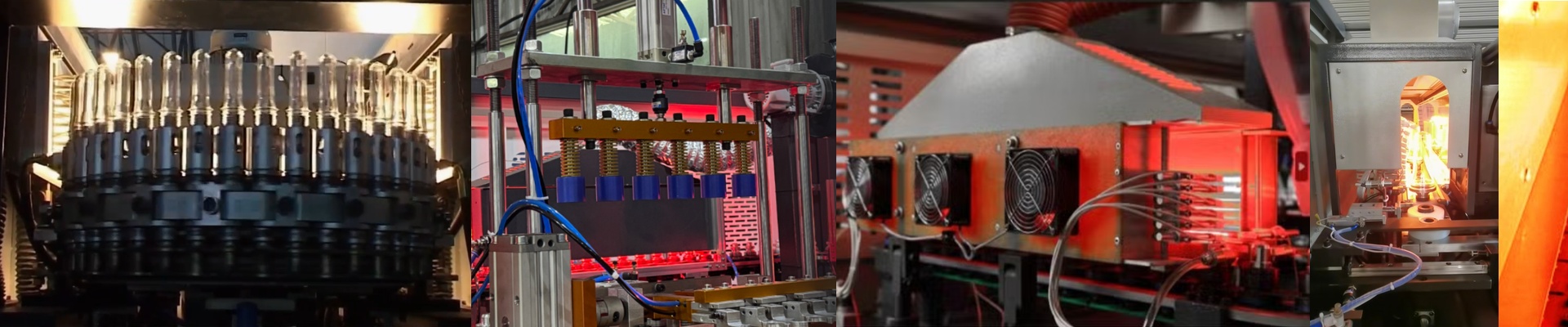
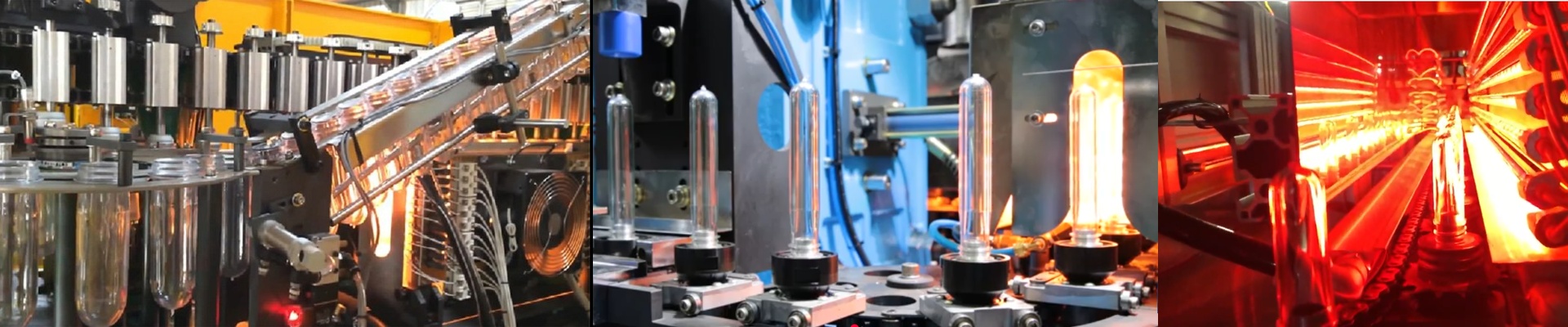
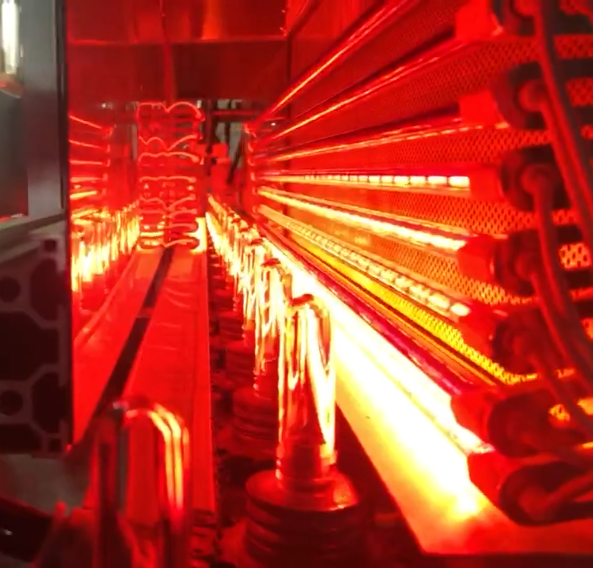
On a rotary SIPA SFR 16 line, preform heating is the first choke point. As the lamps age, the heating tunnel starts drifting—thin necks get scorched while the body runs cool. You’re constantly chasing setpoints, repeatability goes out the window, and scrap climbs. Throw in a mismatched emitter and it gets worse: uneven spectral output, surface temperature that won’t settle, and more tuning time between changeovers.
Technical specifics: infrared output that fits the machine
We built the replacement for the SIPA SFR 16 as a true spec-matched infrared emitter, not a generic halogen swap-in. It runs at the same voltage and power density the blow molder is designed for, delivering stable short- to medium-wave infrared tuned for PET preform heating. The quartz envelope and compact geometry match the original dimensions and mounting, so focal distance and spot pattern across the preform wall stay consistent. The R7s connector and lead routing are corrected to match the SFR 16 socket and wiring. Installation is straightforward, and the contacts stay secure under continuous rotation.
Why this works on the SFR 16
Put the right lamp in, and the heating profile settles fast. Preforms hit target temperature with less overshoot, so stretching is consistent and bottle weight steadies out. That means fewer pinholes, better top load, and less cavity-to-cavity variation. Because the emitter comes up quickly and holds steady, the machine can run at design speed without chasing temperature swings. Energy use drops—heaters aren’t overdriven to compensate for tired lamps—and downtime falls because you spend less time swapping lamps and more time making bottles.
Practical notes before you swap
Before ordering, confirm the exact lamp length, wattage, and connector type for your SFR 16 configuration—some versions differ by year and option package. On install, check reflector alignment and keep the heating tunnel clean; even a good lamp underperforms if the reflector is dirty or out of position. Give the new emitter a short warm-up to reach thermal equilibrium, then retune only once.