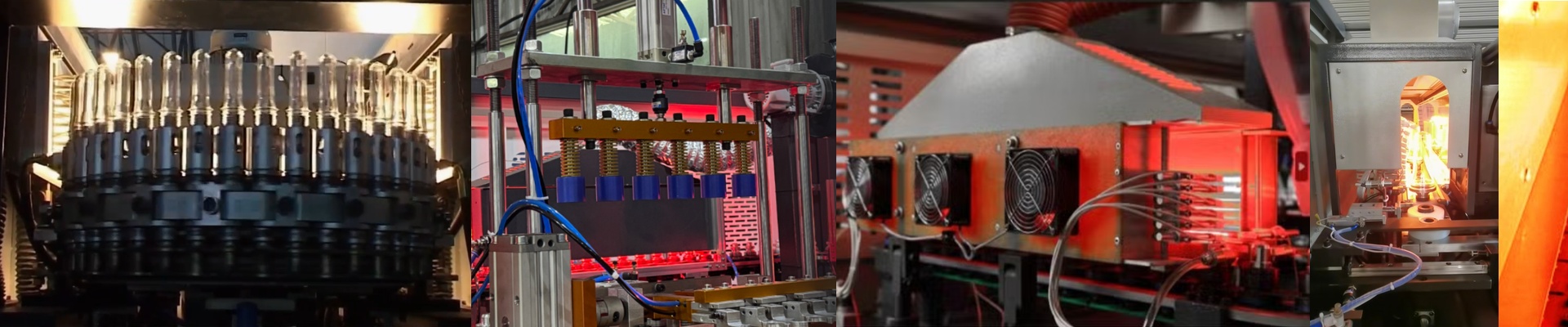
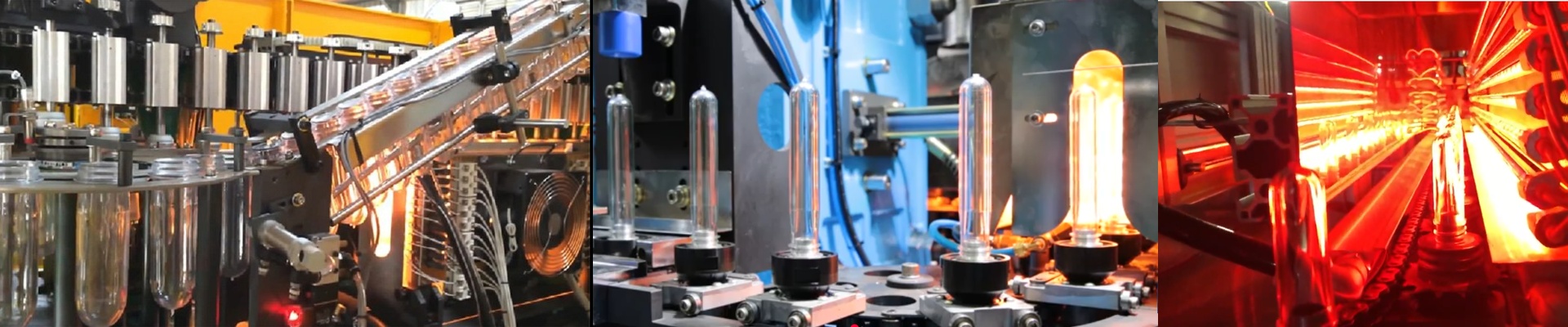
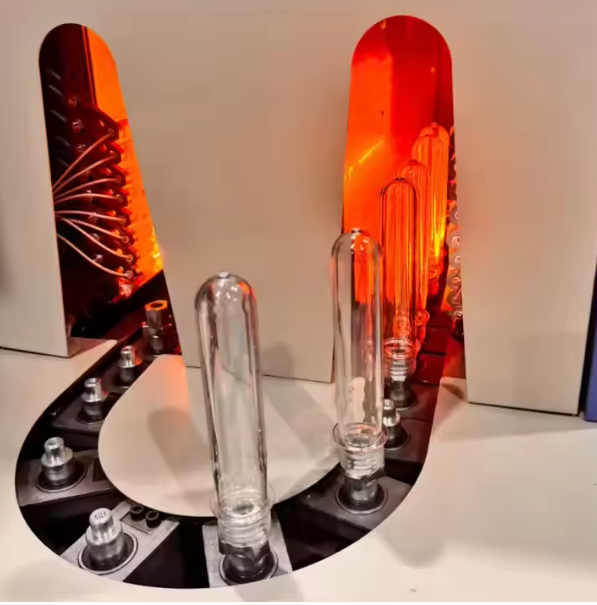
On the floor, your Contiform 3 is running hard—then the heating drift hits. Preforms come out uneven, you’re chasing temperature bands, and every lamp swap is downtime and money. You don’t need a patch job. You need a heater that lets the machine run the way it was designed.
What matters, technically
We built this upgrade around the Contiform 3 heating tunnel geometry and its power architecture. The emitter is short-wave infrared, in a high-purity quartz tube, and it drops in with the original R7s connector and mounting footprint. You get 230 V or 400 V versions, with power density tuned to the preform wall thickness and cycle time your blow molder is targeting. Response is fast—full output in seconds, not minutes. Control stays repeatable: tight spectral output and stable temperature hold cut the swing across the tunnel zones. We call out lamp life in hours, not hype—expect stable output over thousands of hours, with depreciation you can plan around.
Why it plays in this machine
This upgrade is about getting the Contiform 3 to heat the way it should, clean and uncompromised. Preform heating becomes more uniform, so stretch blow molding runs with fewer thin spots and less stress whitening. That means higher first-pass yield and less scrap. Energy use drops because the emitter delivers heat on demand and holds setpoints without overshoot. Fewer lamp changes mean less downtime and lower spare-part spend. In practice, you get steadier line speed, fewer alarms tied to heating drift, and a heating section that behaves predictably shift after shift.
The details that make it work
Installation is straightforward, but the details matter. Match voltage and connector orientation to what’s in the sockets, and verify zone power settings before you lock in the recipe. Infrared heating is line-of-sight, so reflector alignment and clean tube surfaces directly shape temperature distribution. If your line runs heavy color shifts or very thick walls, tell us—we can optimize the emitter curve for those loads. Keep the tunnel clean and dry; condensation or resin buildup will throw the results off. And schedule the changeover on a planned stop, not during a breakdown.